Why Do I Still Have Bad Breath After Brushing My Teeth? Causes & Fixes (2026)
If you brush your teeth carefully every single day and still deal with bad breath after brushing, you’re dealing with one of the most frustrating (and most common) oral health mysteries out there. It feels like it shouldn’t make sense — you just brushed, so why does your breath still smell bad?
The truth is, bad breath even after brushing is rarely about how well you’re brushing. In most cases, it points to something brushing alone can’t fix — bacteria hiding below the gumline, a dry mouth, or an underlying issue — a condition dentists call halitosis — that needs more than toothpaste to solve.
Contents
- 1 What Causes Bad Breath After Brushing?
- 2 Bad Breath Causes: The Bigger Picture
- 3 Chronic Bad Breath: When It’s More Than Just Morning Breath
- 4 ProDentim vs. DentiCore: Which Is Better for Bad Breath after brushing?
- 5 FAQ: Bad Breath After Brushing Teeth
- 5.1 1. Why do I still have bad breath even after brushing and flossing?
- 5.2 2. Does gingivitis cause bad breath?
- 5.3 3. Will cavities cause bad breath?
- 5.4 4. How do I get rid of bad breath permanently, not just temporarily?
- 5.5 5. Why does my breath smell bad in the morning even after brushing the night before?
- 5.6 Final Verdict
What Causes Bad Breath After Brushing?
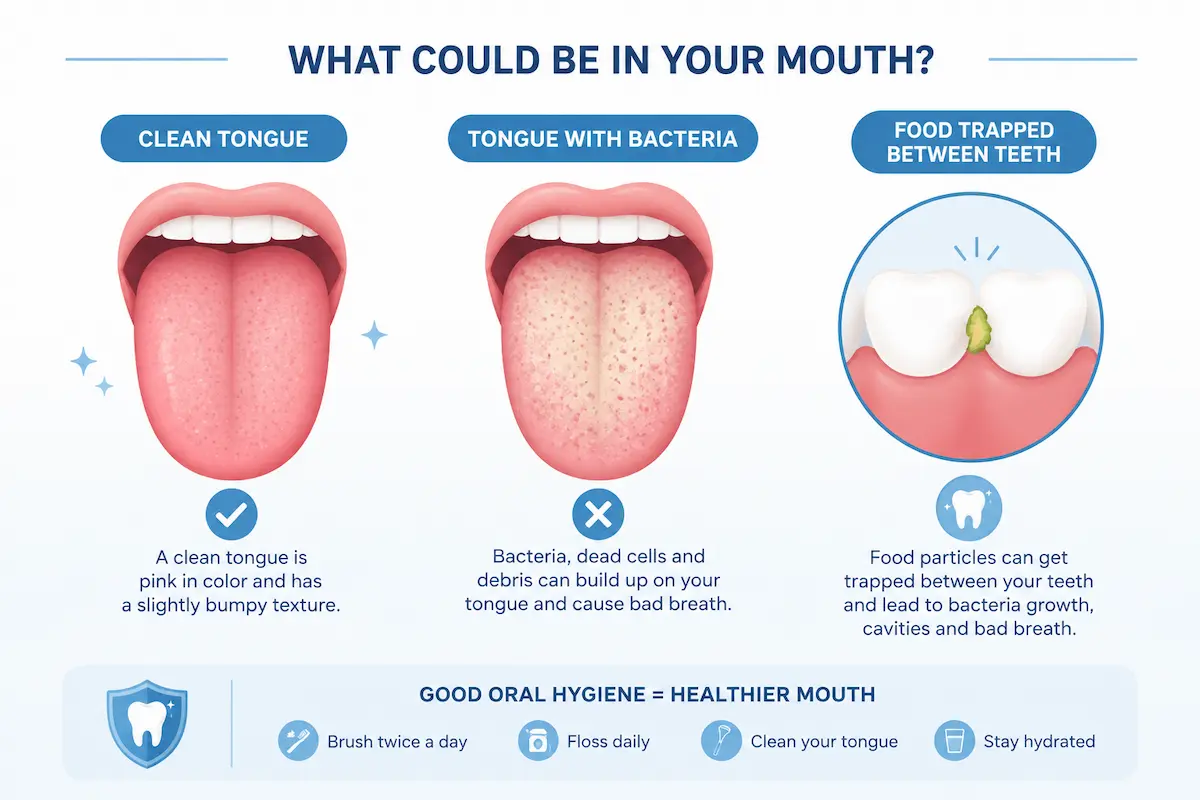
Understanding what causes bad breath in general helps put this specific problem in context. Most bad breath (medically called halitosis) comes from bacteria in the mouth breaking down food particles and releasing sulfur compounds — the source of that unpleasant odor. Brushing removes surface bacteria and food debris, but it doesn’t always reach everywhere those bacteria live.
Here’s why bad breath even after brushing happens so often:
1. Bacteria on the Tongue
Most people brush their teeth but skip their tongue — and the back of the tongue is actually one of the biggest sources of odor-causing bacteria in the mouth. If you’re only brushing teeth and gums, you may be missing the real source entirely.
2. Dry Mouth
Saliva naturally washes away bacteria and food particles throughout the day. If you have dry mouth — from mouth breathing, certain medications, dehydration, or sleeping with your mouth open — bacteria have more room to build up, certain medications, dehydration, or sleeping with your mouth open — bacteria have more room to build up, which is why breath often smells worse first thing in the morning even after a thorough night-before brushing.
3. Trapped Food Between Teeth
Brushing alone doesn’t remove everything wedged between teeth. Without daily flossing, trapped food particles continue breaking down and producing odor — a common reason for bad breath after brushing that has nothing to do with brushing technique.
4. Gum Disease
This is one of the most overlooked causes of persistent bad breath after brushing teeth.
Does Gingivitis Cause Bad Breath?
Yes — gingivitis is a well-documented cause of bad breath. As bacteria build up along the gumline and gums become inflamed, they release the same sulfur compounds responsible for halitosis. If your bad breath is paired with gums that look red, swollen, or bleed easily, gum disease is a likely contributor, not just poor brushing technique.
5. Cavities and Tooth Decay
Will Cavities Cause Bad Breath?
Yes, they can. As tooth decay progresses, bacteria collect inside the decayed area of the tooth, and food particles can get trapped in ways a toothbrush simply can’t reach. Does tooth decay cause bad breath even when you’re brushing regularly? Often, yes — because the decay itself is the source, not your hygiene routine.
6. Underlying Digestive or Sinus Issues
In some cases, persistent bad breath isn’t dental at all — postnasal drip, sinus infections, or digestive issues can all contribute to chronic odor that brushing can’t touch.
Bad Breath Causes: The Bigger Picture
Zooming out, the most common bad breath causes overall include: poor oral hygiene habits (not just brushing, but flossing and tongue cleaning), dry mouth, smoking, certain foods (garlic, onions, coffee), gum disease, and in rarer cases, underlying medical conditions. Most day-to-day bad breath comes down to a combination of these — which is why fixing just one piece (like brushing harder or more often) often isn’t enough on its own.
Chronic Bad Breath: When It’s More Than Just Morning Breath
If you’ve ruled out the obvious culprits and you’re still dealing with bad breath after brushing every single day, you may be dealing with chronic bad breath rather than an occasional issue. Chronic bad breath causes tend to be more persistent — ongoing gum disease, a tongue coating that keeps rebuilding, or a dry mouth condition that doesn’t resolve on its own. This is the point where a bigger daily routine change (not just brushing twice a day) usually becomes necessary.
Where Oral Probiotics Fit Into the Picture
Alongside brushing, flossing, and tongue cleaning, many people dealing with bad breath even after brushing add an oral probiotic to their daily routine. The idea is to help support a healthier bacterial balance in the mouth — targeting the bacteria that cause odor at the source, rather than just masking the smell temporarily like mouthwash or mints do.
We’ve tested and compared the top-rated options specifically for fast and long-lasting fresh breath:
If your main concern is breath that stays fresh throughout the entire day — not just right after brushing — this next option is built specifically for that:
ProDentim vs. DentiCore: Which Is Better for Bad Breath after brushing?
| Product | Best For | Pros | Cons | Review |
|---|---|---|---|---|
| ProDentim | Fast-acting bad breath relief | Chewable format, noticeable results reported quickly, probiotic-based approach | Best paired with consistent flossing for longer-lasting results | Read Review |
| DentiCore | Long-lasting fresh breath support | Formulated for all-day freshness, zinc-based odor control, tablet format | Results build gradually with daily use rather than instantly | Read Review |
How to Get Rid of Bad Breath Permanently
Once you understand what’s driving your bad breath after brushing teeth, here’s how to get rid of bad breath permanently instead of just covering it up:
- Clean your tongue daily — use a tongue scraper or the back of your toothbrush, not just your teeth.
- Floss every day, not just when something feels stuck — trapped food is one of the most common hidden causes.
- Stay hydrated throughout the day to keep saliva production up and bacteria levels down.
- Treat gum disease early — if bleeding, redness, or swelling is present alongside the odor, this needs to be addressed directly, not masked.
- Avoid relying only on mints or mouthwash — these temporarily cover odor but don’t address the bacteria causing it.
- Be consistent for at least 2–3 weeks before expecting a real, lasting change — bad breath that took months to build up won’t disappear overnight.
Brushing alone doesn’t remove everything wedged between teeth. Without daily flossing, trapped food particles continue breaking down and producing odor — a common reason for bad breath after brushing that has nothing to do with brushing technique.
Not sure which option fits your specific situation best?
FAQ: Bad Breath After Brushing Teeth
1. Why do I still have bad breath even after brushing and flossing?
This usually means the bacteria causing the odor live somewhere brushing and flossing don’t fully reach — most commonly the back of the tongue, or below the gumline if early gum disease is present. Adding tongue cleaning and an oral probiotic to your routine often helps close that gap.
2. Does gingivitis cause bad breath?
Yes. Gingivitis involves bacterial buildup and inflammation along the gumline, which produces the same sulfur compounds responsible for bad breath. If your breath odor is paired with red or bleeding gums, gum health is likely part of the cause.
3. Will cavities cause bad breath?
Yes, cavities can absolutely cause bad breath. Bacteria collect inside decayed areas of the tooth, and food particles can get trapped there in ways a toothbrush can’t reach — producing a persistent odor even with regular brushing.
4. How do I get rid of bad breath permanently, not just temporarily?
Permanent improvement usually requires addressing the source (tongue bacteria, gum health, hydration, or diet) rather than just masking the smell with mints or mouthwash. Most people see meaningful, lasting improvement within 2 to 4 weeks of a more complete daily routine.
5. Why does my breath smell bad in the morning even after brushing the night before?
This is extremely common and is usually linked to dry mouth overnight — saliva production drops significantly while you sleep, giving bacteria more time to build up before your next brushing.
Final Verdict
If you’re stuck wondering why you have bad breath after brushing teeth every day, the answer almost never comes down to brushing harder or more often — it’s about reaching the parts of your mouth brushing alone doesn’t cover: your tongue, the spaces between your teeth, and your gumline. Add consistent flossing, daily tongue cleaning, and enough hydration, and most cases of bad breath even after brushing start improving within a few weeks.If you’re still dealing with bad breath after brushing every single day despite trying the basics, you may be facing something more chronic
For extra daily support — especially if fast relief or long-lasting freshness is your main priority — comparing a probiotic-based option like ProDentim against a longer-lasting formula like DentiCore can help you find the right fit for your specific situation.