
Why Do My Gums Bleed When I Brush My Teeth? Causes, Fixes & When to Worry
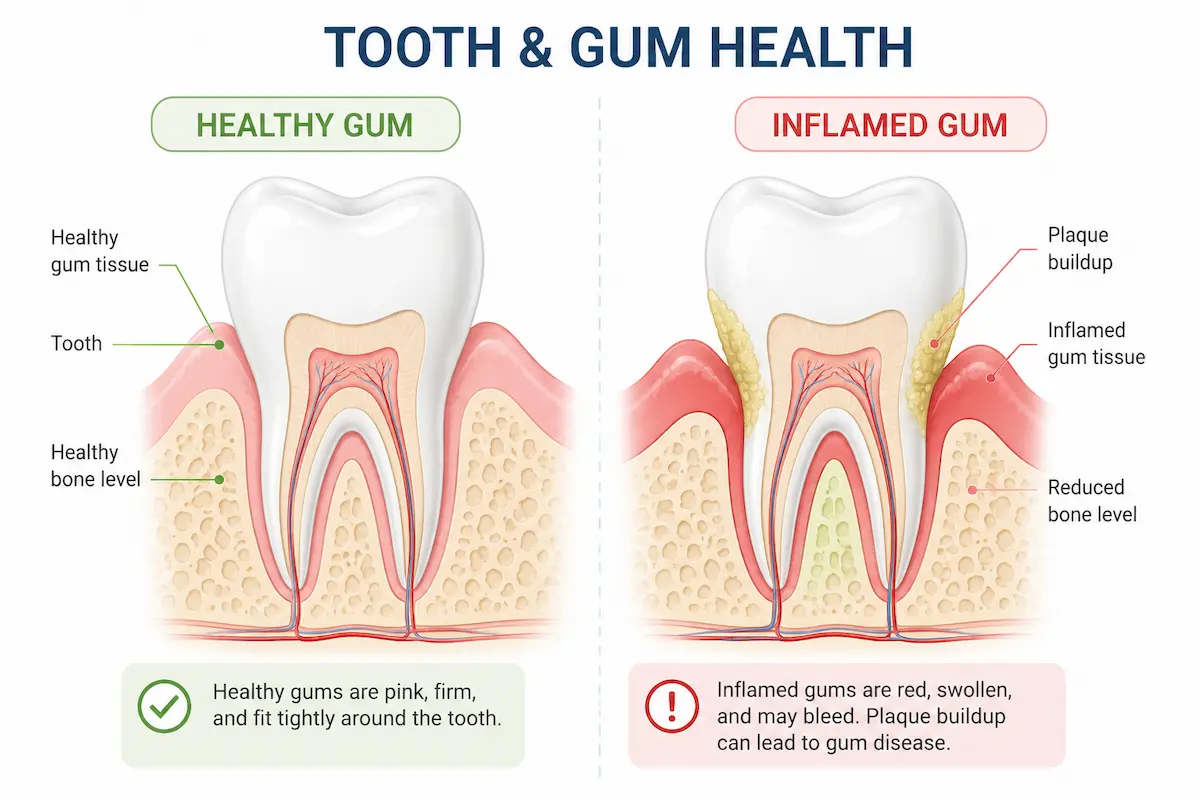
If you’ve ever spit out pink-tinged toothpaste and asked yourself “why do my gums bleed when I brush my teeth?” — you’re far from alone. It’s one of the most common oral health complaints out there, and while an occasional spot of blood isn’t usually an emergency, gums that bleed regularly are your mouth’s way of sending a warning signal.
In this guide, we’ll break down exactly why do my gums bleed when I brush my teeth, what’s normal versus what’s not, how to stop bleeding gums immediately, and when it’s time to stop guessing and see a dentist.
Affiliate Disclosure: This article contains affiliate links. If you make a purchase through one of our links, we may earn a commission at no extra cost to you.
Contents
- 1 Why Do My Gums Bleed When I Brush My Teeth? The Most Common Causes
- 2 How to Stop Bleeding Gums Immediately: What Actually Helps
- 3 Is It Normal for Gums to Bleed When Flossing?
- 4 Where Oral Probiotics and Gum-Support Supplements Fit In
- 5 Quick Comparison: Best Supplements for Bleeding Gums
- 6 What Causes Gums to Bleed So Easily? Signs You Shouldn’t Ignore
- 7 Why Do My Gums Bleed When I Brush My Teeth?
- 8 Final Verdict
Why Do My Gums Bleed When I Brush My Teeth? The Most Common Causes
There isn’t one single answer to why do my gums bleed when I brush my teeth — it usually comes down to one (or a combination) of these underlying causes:
1. Plaque Buildup and Early Gum Disease
The most common reason people ask why do my gums bleed when I brush my teeth is plaque that has built up along the gumline. When plaque isn’t removed through regular brushing and flossing, it can irritate gum tissue, leading to gingivitis — the earliest stage of gum disease. Gingivitis is often reversible with better oral hygiene, but if ignored, it can progress into something more serious.
2. Brushing Too Hard or Using the Wrong Brush
A lot of people wondering why do my gums bleed when I brush my teeth are simply brushing too aggressively. A hard-bristled toothbrush combined with heavy pressure wears down delicate gum tissue, causing irritation and bleeding that has nothing to do with disease — just technique.
3. Gums Bleed When Flossing (Especially If You’re Just Starting)
If you’ve recently gotten back into a flossing routine, some light bleeding for the first week is completely normal. In fact, gums bleed when flossing most often simply because the gums aren’t used to the stimulation yet — not because something is wrong. Consistent, gentle flossing is actually one of the best long-term fixes for bleeding gums, not a cause to worry about.
4. Vitamin Deficiency and Bleeding Gums
Bleeding gums vitamin deficiency is more common than most people think — particularly low vitamin C or vitamin K. Vitamin C plays a role in gum tissue repair, while vitamin K is involved in normal blood clotting. A diet low in fresh fruit, vegetables, or leafy greens can be a hidden contributor to gums that bleed more easily than they should.
5. Hormonal Changes
Pregnancy, menstrual cycles, and other hormonal shifts can increase blood flow to gum tissue, making gums more sensitive and prone to bleeding — sometimes called “pregnancy gingivitis.”
6. Certain Medications
Blood thinners and a handful of other medications can make gums bleed more easily, even with gentle brushing. If you’ve started a new medication and noticed a change, it’s worth mentioning to your dentist.
How to Stop Bleeding Gums Immediately: What Actually Helps
Now that you know why do my gums bleed when I brush my teeth, here’s what actually helps stop it.
If your bleeding is mild and not accompanied by pain, loose teeth, or persistent swelling, here’s how to stop bleeding gums immediately and start seeing real improvement:
- Switch to a soft-bristled toothbrush and use gentle, circular motions instead of aggressive back-and-forth scrubbing.
- Floss daily, gently — even though gums bleed when flossing at first, skipping it usually makes the underlying plaque problem worse, not better.
- Rinse with warm salt water to help calm mild gum inflammation.
- Increase vitamin C and vitamin K intake — citrus fruits, leafy greens, and bell peppers are a good starting point if bleeding gums vitamin deficiency is a factor.
- Stay consistent — most people see noticeable improvement within 2 to 4 weeks of consistent care.
Is It Normal for Gums to Bleed When Flossing?
Short answer: occasionally, yes — especially in the first week of a new routine. But if gums bleed when flossing every single time, weeks into a consistent routine, that’s a sign plaque or early gum disease may still be present, and it’s worth a closer look rather than assuming it will just go away.
Where Oral Probiotics and Gum-Support Supplements Fit In
Beyond brushing technique and diet, many people dealing with ongoing bleeding gums add an oral probiotic or gum-support supplement to their daily routine. The idea is to support a healthier balance of bacteria in the mouth, which may help reduce some of the risk factors linked to gum irritation over time — alongside, not instead of, brushing and flossing.
We’ve tested and compared the top-rated options for bleeding and sensitive gums specifically:
If your priority is long-term gum nourishment rather than fast symptom relief, this next option may be a better fit:
Quick Comparison: Best Supplements for Bleeding Gums
| Product | Best For | Format | Review |
|---|---|---|---|
| ProvaDent | Bleeding gums & inflammation | Capsule | Read Review |
| Dentitox Pro | Gum health & vitamin support | Liquid drops | Read Review |
| ProDentim | Bad breath & fast results | Chewable tablet | Read Review |
| DentiCore | Long-lasting fresh breath | Tablet | Read Review |
What Causes Gums to Bleed So Easily? Signs You Shouldn’t Ignore
Home care helps with mild, occasional bleeding — but you shouldn’t wait to see a dentist if you notice:
- Bleeding that continues for more than 1–2 weeks despite gentler brushing and flossing
- Gums that are swollen, red, or painful to the touch
- Loose or shifting teeth
- Persistent bad breath along with bleeding
- Bleeding that happens even without brushing (spontaneous bleeding)
These can be signs of more advanced gum disease that needs professional treatment — not just a change in home routine.
Not sure which product fits your specific situation? Compare your options side by side:
Why Do My Gums Bleed When I Brush My Teeth?
1. Why do my gums bleed when I brush my teeth even though I brush gently?
Even gentle brushing can cause bleeding if plaque has built up along the gumline, causing gingivitis. In this case, the bleeding isn’t about how hard you’re brushing — it’s a sign the gums are inflamed and need more consistent plaque removal, not less.
2. Is it normal for gums to bleed when flossing?
Some light bleeding is common in the first week of a new or renewed flossing routine, as gums adjust to the stimulation. If gums bleed when flossing every time well beyond that first week, it’s usually a sign of plaque buildup that needs addressing.
3. What vitamin deficiency causes bleeding gums?
Bleeding gums vitamin deficiency is most often linked to low vitamin C or vitamin K. Vitamin C supports gum tissue repair, while vitamin K plays a key role in normal blood clotting.
4. How do I stop bleeding gums immediately?
Switching to a soft-bristled brush, using gentle circular motions, rinsing with warm salt water, and flossing consistently (even if it bleeds at first) are the fastest ways to start reducing bleeding. Most people notice real improvement within 2 to 4 weeks.
5. Should I stop flossing if my gums bleed?
No — in most cases, that’s the opposite of what helps. Bleeding is usually a sign that plaque has built up along the gumline, and gentle, consistent flossing is one of the best ways to reduce that buildup over time.
Final Verdict
If you’ve been asking yourself why do my gums bleed when I brush my teeth, the answer in most cases comes down to the basics: a softer brush, gentler technique, and consistent flossing — even when it stings at first. Add in enough vitamin C and K, and most mild bleeding starts clearing up within a few weeks.
Understanding why do my gums bleed when I brush my teeth is the first step — acting on it consistently is what makes the difference.
If you’ve cleaned up your routine and are still seeing blood after two weeks, that’s your cue to loop in a dentist rather than wait it out. And if you’re looking for extra daily support alongside your routine, comparing a few of the top-rated gum health supplements side by side can help you find the option that best matches your specific concern — whether that’s inflammation, sensitivity, or long-term gum nourishment.